Custom Search
Showing posts with label climate change. Show all posts

Wednesday, August 27, 2008

Ministers to switch to hybrids; rest of the world responses by not really giving a shit

http://cache.viewimages.com/xc/82147225.jpg?v=1&c=ViewImages&k=2&d=17A4AD9
FDB9CF19368FFB0B613D6DEB0119740C87B6AECB55A5397277B4DC33E

An August 27th Japan Times article reports the following:

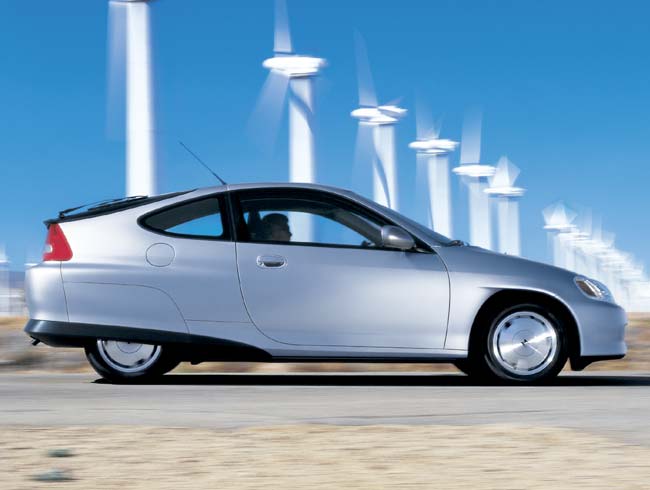
Environment Minister Tetsuo Saito proposed Tuesday replacing all official cars for Cabinet ministers with next-generation automobiles, such as hybrids, by the time the Kyoto Protocol expires in 2012 as part of efforts to cut green house gas emissions.

He told a news conference after presenting the proposal at a ministers' informal meeting that other Cabinet ministers gave their approval.

According to the Environment Ministry, six out of 13 official cars for Cabinet members are already next-generation automobiles.

This is great, but does it really deserve a news article? I understand that Saito and other ministers are trying to drum up some good publicity, but that doesn't mean the Japan Times has to play along.

Why must we make so much out of such a commonsensical move towards reducing carbon emissions? In my opinion this kind of lauding only serves to belittle the real lifestyle changes that are needed in order to reduce carbon emissions. If simply switching to hybrid vehicles deserves a mention in the newspaper, what do you get for cutting your home electricity use in half? . . .an encyclopedia entry?

Sunday, August 24, 2008

Family Mart goes "eco". . .sorta

In an August 20, 2008 article the Mainichi Daily News reported that the convenience store chain Family Mart with begin building around 1,000 stores using wood materials. The logic is explained in the article:
Wooden structures can cut down CO2 emissions in the process of construction from 81 tons to 33 tons per store compared to steel-framed stores.
Not sure where those numbers come from, but I'm skeptical of how one can trace CO2 emissions through the process of materials construction. Plus, 1,000 stores is a fraction of the new stores built by Family Mart each year (see the graph below, taken from Family Mart's website)

Of course none of these very VOCAL moves on the part of corporations towards being "eco-friendly" seem to be very sincere. Actually, they may be sincere, but only if the "eco" in "eco-friendly" is taken to mean "economically", rather than "ecologically". For example, later the article reads:
The chain also estimates that it can reduce its construction expenses by over 3 billion yen as it costs about 12 million yen to build a wooden store, compared to about 15 million yen for a steel-framed store that could cost more in the future due to a rise in material prices.
Moreover, I wonder where the wood is coming from. . .probably not Japan; domestic wood is definately not "eco-friendly" (economically friendly that is). And, though foreign wood is economically friendly, it is most definately NOT ecologically friendly. No amount of "eco-friendly" convenience stores can overcome the damage of heavy deforestation abroad.

But, I will remain hopeful that Family Mart (and other chains) will make me eat my words.

Thursday, August 7, 2008

Discourse of Tree Planting

Reuters reports that a new report by the Australian National University (ANU) suggests that
uncut forests store about three times the amount of carbon as those that have been planted (plantation forests). The report questions the use of plantation forests in international carbon trading schemes and suggests that there is a need to protect older forests. Click here for a PDF of the full report.

This report calls into question the effectiveness of some of the recent activities in Japan focused on tree planting and carbon offsetting. See the Gaia Initiative's +1 Forest Program.

Approximately 67% of Japan's land area is comprised of "forest" that was heavily cut in the post-war period. Therefore, a large portion of the area is plantation (comprised mostly of cypress and cedar trees). Importation of foreign wood has rendered domestic trees unprofitable and so there is now an overabundance of plantation forests that are simply being abandoned, which is creating a host of new ecological problems for mountain villages (animal pestilence being perhaps the most visible).


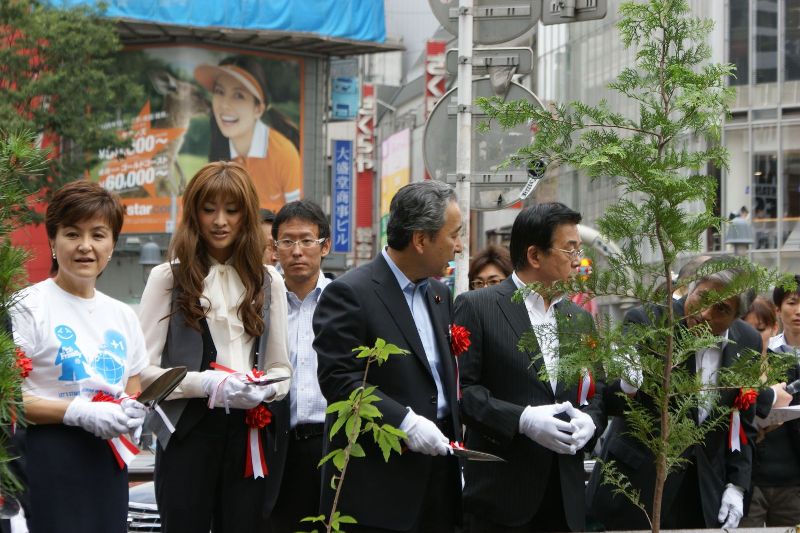
At the same time, new global discourses focused on climate change have become very prominent in Japanese popular culture and there is a new "eco" craze, rooted mostly in urban areas. Part of being "eco" means planting as many trees as possible ("let's carbon offset"). The
national forest agency has picked up on this discourse and so tree planting is given legitimacy. The problem is that the trees selected for planting are often the same plantation varieties of which there is already an overabundance. In other words, "eco" discourses give legitimacy to, and seem to even encourage, tree planting that is at best ineffective and at worst ecological disastrous. But, no one seems to think past the discourse: organizations take photos of members planting trees, businesses offer sponsorship, and the forest agency boasts about efforts to combat climate change.